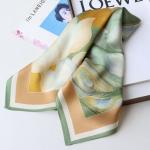
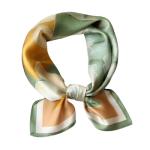
This is a silk scarf that is exceptionally rich in artistic feel and literary ambiance. Based on the image you provided, here is an analysis of its color palette, design elements, suitable wearing scenarios, and styling suggestions.
I. Analysis of Color Palette and Design Elements
1. Overall Layout
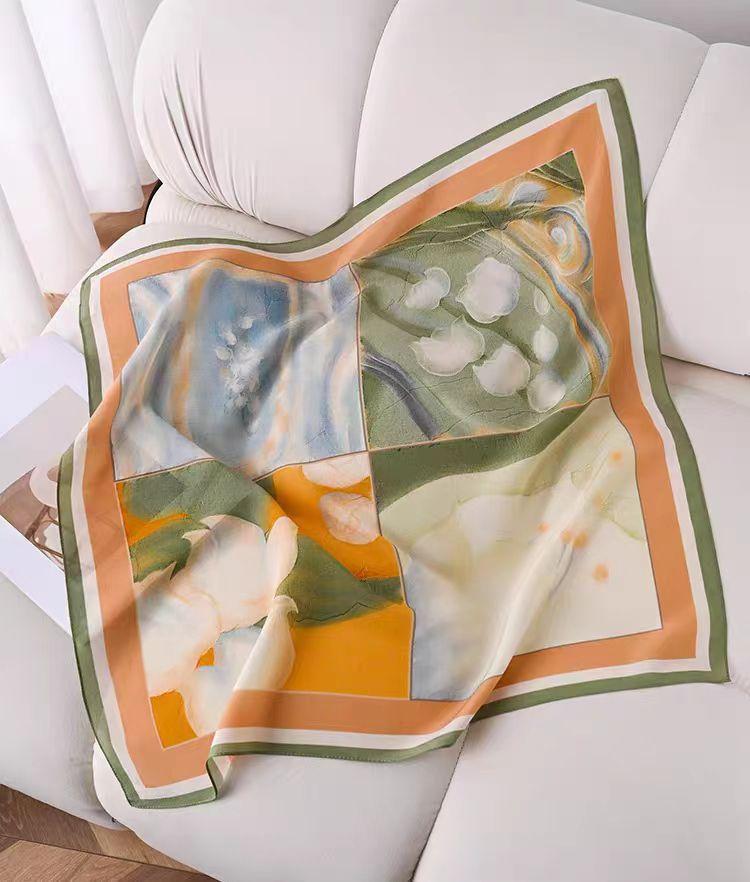
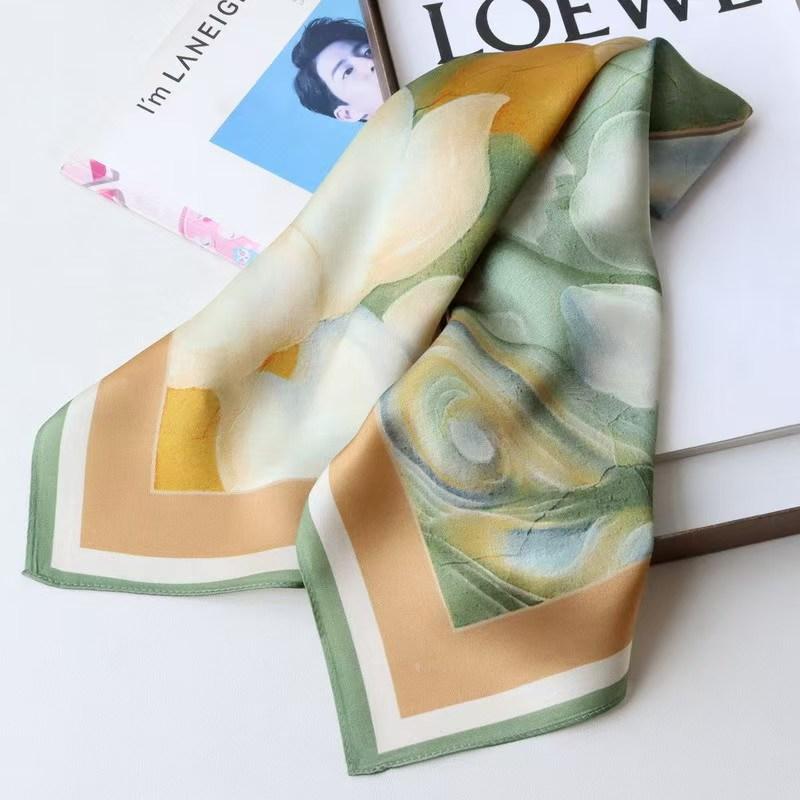
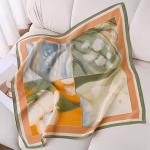
The scarf features a modular, abstract “four-grid” layout. The four quadrants are not strictly uniform; instead, they appear like fragments of separate watercolor or mineral-pigment paintings pieced together, giving it a very modern artistic feel.
2. Color Palette
This is a very harmonious, serene, and slightly cool-toned palette, with clear seasonal attributes (early spring, early autumn) and an artistic style:
Dominant Colors:
Celadon Green : Runs throughout the entire composition, giving a fresh, vintage, and high-end feel.
Water Blue : Appears in the top-left and bottom-right quadrants, soft, misty, and with the transparency of watercolor.
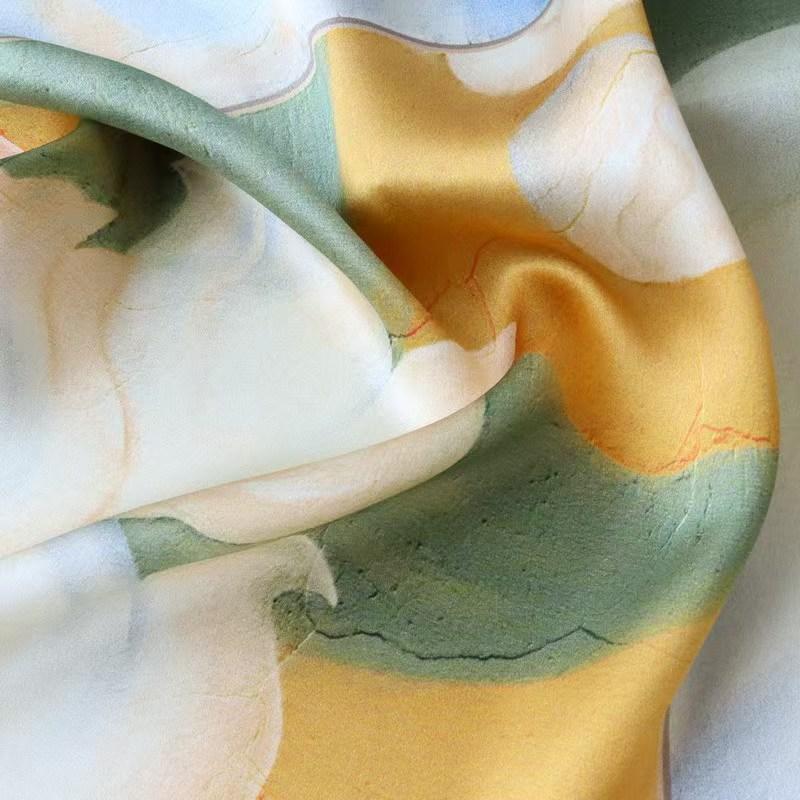
Mustard Yellow : Found in the bottom-left quadrant, adding a touch of warmth and vintage contrast to the overall cool tones, creating a strong visual impact.
Accent Colors:
Cream White : Used for the flowers and abstract shapes, providing a soft transition.
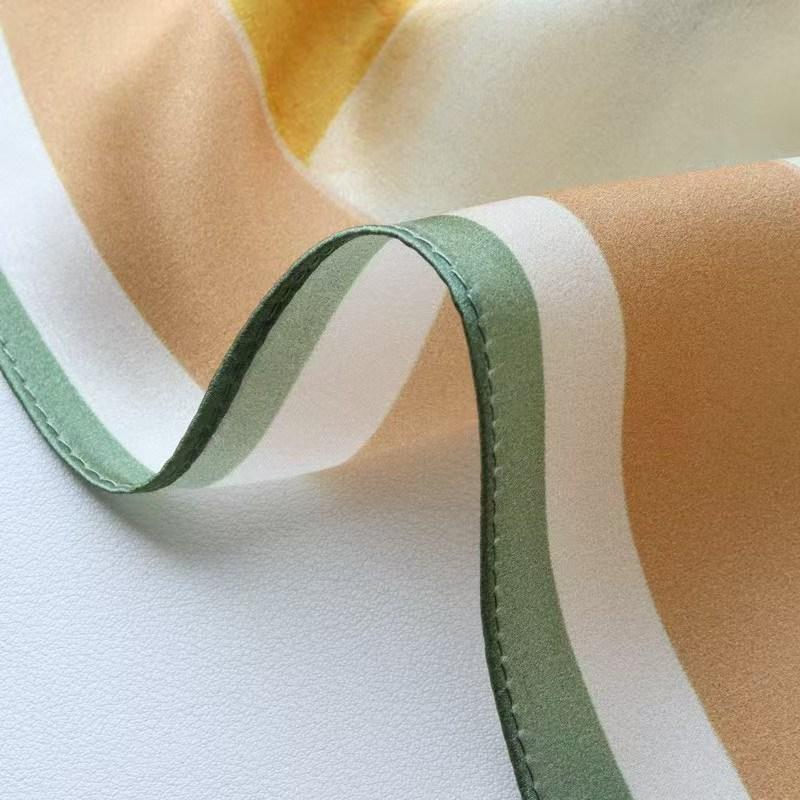
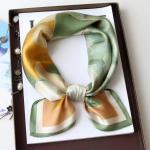
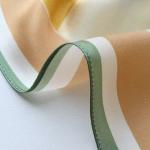
Caramel/Warm Camel : Used for the wide outer border. This color is crucial; it "locks in" the inner cool colors, giving the overall design a grounded sense of stability and texture.
Style Keywords: Morandi color palette, mineral pigment , art collage, nostalgic, soft.
3. Design Elements (Patterns)
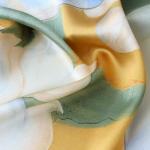
Abstract Flora: The bottom-left quadrant features prominent, large white petals (likely abstract lilies or tulips), rendered with the texture of mineral pigments, showing a distinct granular feel.
Watercolor Brushstrokes: The top-left and bottom-right quadrants show flowing, misty watercolor bleeding effects, resembling water ripples or rain streaks, which are very delicate.
Abstract Geometrics/Rock Texture: The top-right quadrant features a texture resembling concentric circles (or a vortex), and the bottom-right has circular dot textures, carrying the raw texture of primitive rock art or jade.
II. Suitable Wearing Scenarios
Due to its artistic temperament and soft color palette, this scarf is suitable for the following scenarios:
Art and Cultural Occasions: Visiting art galleries, museums, artistic bookstores, or attending gallery openings. Its artistic style will perfectly complement the environment, showcasing the wearer's aesthetic taste.
Elegant Business Socializing: In business lunches, tea parties, or informal meetings that are not overly formal but require a sense of quality, it can instantly breathe life into stiff professional wear.
Urban Leisure Vacation: Ideal for visiting culturally rich cities or for enjoying an afternoon tea at a literary-style café.
Daily Workplace (Elevating Texture): If your workplace allows, it is perfect for pairing with monochromatic tops to add a touch of softness to your professionalism.
III. Styling Suggestions
As the scarf itself is rich in color and pattern, the pairing principle should be (balancing complexity with simplicity), with the scarf as the highlight.
1. Color Matching (Based on colors extracted from the scarf)
Pairing with Camel/Caramel (Most Stable and High-end): The scarf border is camel. Match it with a camel coat, a khaki trench coat, or a warm brown cashmere sweater. This will echo the border for a very coordinated overall look.
Pairing with White/Cream White (Fresh and Bright): There are many white flowers and water blue elements in the scarf. Pairing with a pure white shirt, a cream-colored knit sweater, or a creamy-white blazer can maximize the display of the scarf's colors and patterns.
Pairing with Blue Tones (Literary and Intellectual): Echoing the water blue in the scarf. Try matching with a Deep Navy blazer, a denim blue shirt, or a water-blue silk top.
Pairing with Dark Green (Mysterious and Vintage): Echoing the celadon green in the scarf. Match with a deep emerald green wool pencil skirt or a dark green knit top for a full vintage vibe.
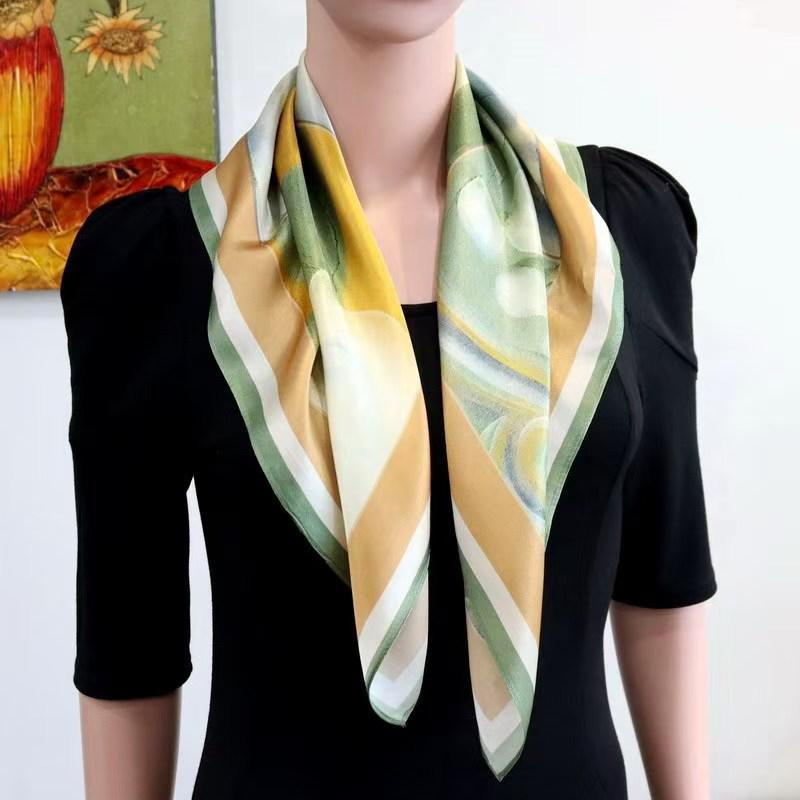
Pairing with Black (Safest): The scarf’s softness will break the monotony of black, but it is recommended to pair it with black clothing in matte materials to avoid excessive contrast.
2. Specific Outfit Examples (Lookbook)
Look 1: Classic Trench Coat Look (For Autumn/Spring Commute)
Attire: Khaki classic trench coat + pure white shirt + dark straight-leg jeans + brown loafers.
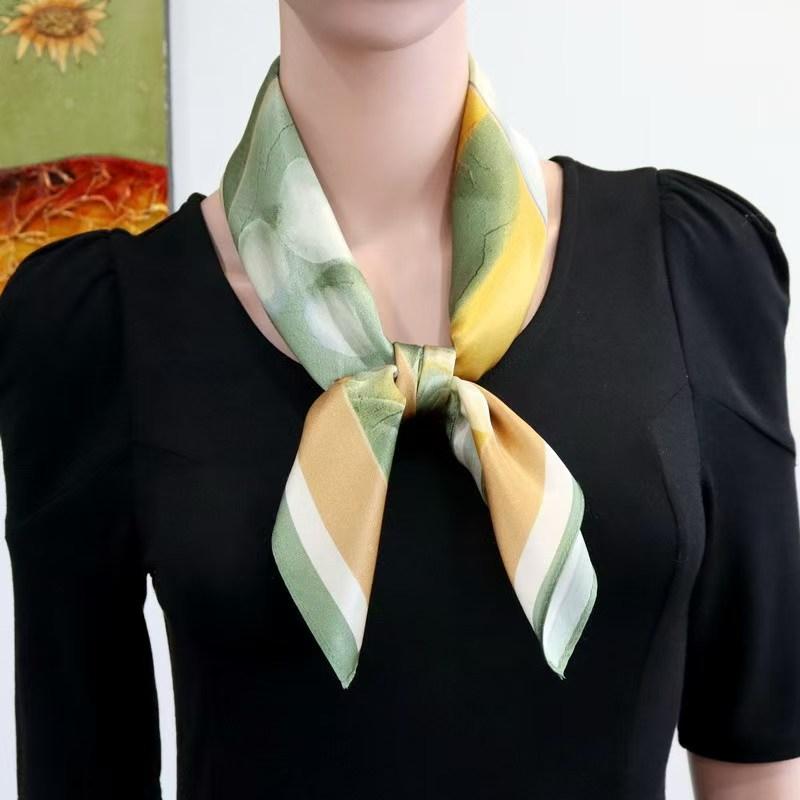
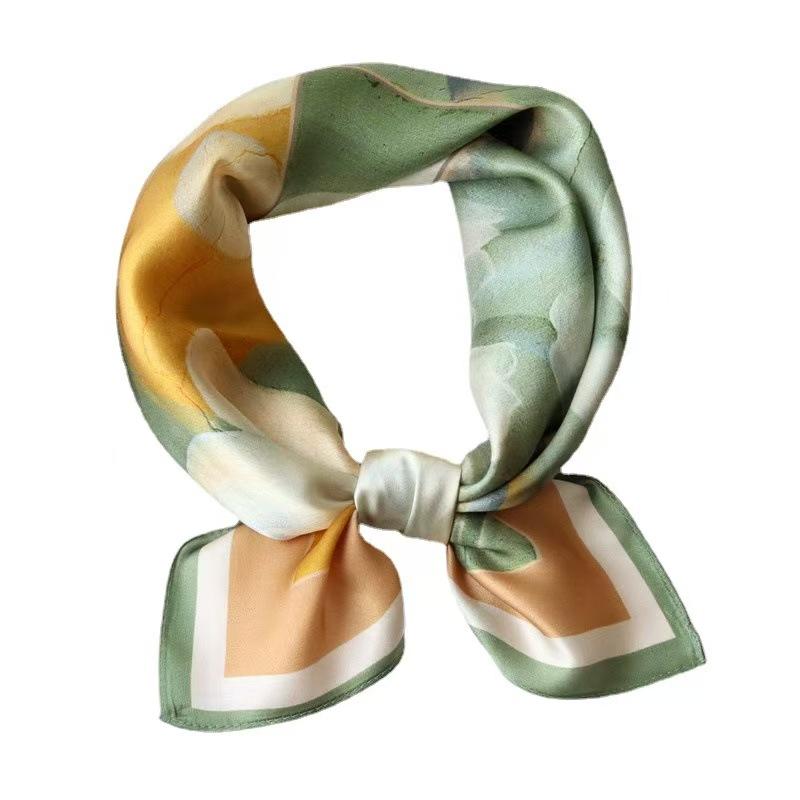
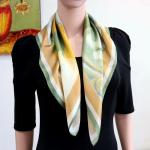
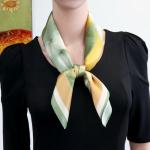
Scarf: Classic Cowboy Knot or One-side Knot . Let the scarf's green and yellow become accents at the trench coat’s lapel.
Look 2: Literary Gallery Look (For Dates/Shopping)
Attire: Creamy-white knit dress (long sleeves/turtleneck) + warm brown Chelsea boots.
Scarf: Large Shrug style or As a Belt. Display the scarf prominently, or tie it diagonally at the waist as an accessory.
Look 3: Elegant Workplace Look (For Informal Meetings)
Attire: Navy blue silk shirt + oatmeal-colored wide-leg pants + pointed-toe high heels.
Scarf: Elegant Bunny Ears Knot or Audrey Hepburn style Triangle Knot , tied close to the neck for a delicate and capable look.
Look 4: Bag Accessory Detail (Not worn on body)
Attire: Any monochromatic outfit.
Scarf: Bag handle wrap. Especially suitable for bags in earthy tones, white, or green, instantly elevating the bag’s quality and distinctiveness.
Conclusion:
This is a highly designer-oriented artistic silk scarf. Due to the misty quality of its mineral and watercolor pigment effects, it is recommended to pair it mostly with clothing made of natural materials (such as cashmere, silk, high-quality cotton/linen). Its soft color palette is not suitable for pairing with clothing that is too utilitarian or has an overly industrial feel. It is a powerful tool for elevating the artistic temperament of an overall look.